
Conference Tutorials
Conference Tutorials offer the bonus of additional educational experiences for SEASUG Conference attendees.
We have talented, recognized, and experienced instructors prepared to share their knowledge in these 3.5-hour sessions.
The tutorials cover a wide variety of topics and skill levels, which appeal to everyone interested in exceptional in-depth training.
Please note that tutorials are an extra fee event at SEASUG.
For Tutorial cost information, please visit our registration page:
click here.
SEASUG 2026 is
bring your own device
for any tutorials and/or hands on workshops for which laptops and/or software is required.
Some of the Tutorials require a laptop and/or software. This is indicated in the tutorial description.
If you have any questions regarding a tutorial, please contact our Tutorial Coordinators:
Richann Watson and Dionne Williams
tutorials@sesug.org
.
| Thursday, 10/22/2026 8:30am - 12:00pm |
|---|
| Tutorial Title | Instructor |
|---|---|
| SAS® Certification Review: Base Specialist | Jim Blum |
| Getting Started with PROC REPORT: Understanding the Building Blocks | Josh Horstman |
| Creating Custom Graphs Using SAS® and R | Richann Jean Watson |
| Time for a Quick Start to Time Series Analysis | Danny Modlin, SAS® |
| Thursday, 10/22/2026 1:00pm - 4:30pm |
|---|
| Tutorial Details |
|---|
 Title: SAS® Certification Review: Base Specialist
Scheduled Time: Thursday, October 22nd, 8:30 am - 12:00 pm
Instructor: Jim Blum
Abstract: This tutorial is an intensive review of concepts tested on the Base Programming Specialist certification exam.
The session includes a review of each main objective, emphasizing the most difficult components of the expanded objectives that are likely to be tested.
Examples focus on sample questions and how to approach them, including how to recognize what is actually being asked in the question and how to evaluate
potential answers. Students are also encouraged to bring questions based on their study and preparation for the exam..
Instructor Bio: Jim Blum is a co-author of Fundamentals of Programming in SAS: A Case Studies Approach, published in 2019.
Since August of 2000, he has been a Professor of Statistics at the University of North Carolina Wilmington where he has developed and taught
original courses in SAS programming for the university. These courses cover topics in Base SAS, SAS/SQL, SAS/STAT, and SAS Macros.
He also regularly teaches courses in regression, experimental design, categorical data analysis, and mathematical statistics;
and he is a primary instructor in the Master of Data Science program at UNC Wilmington which debuted in the fall of 2017.
He has experience as a consultant on data analysis projects in clinical trials, finance, public policy and government, and marine science and ecology,
and is a member of the committee that designed the Clinical Trials Programming Using SAS 9.4 Certification Exam.
He earned his MS in Applied Mathematics and PhD in Statistics from Oklahoma State University.

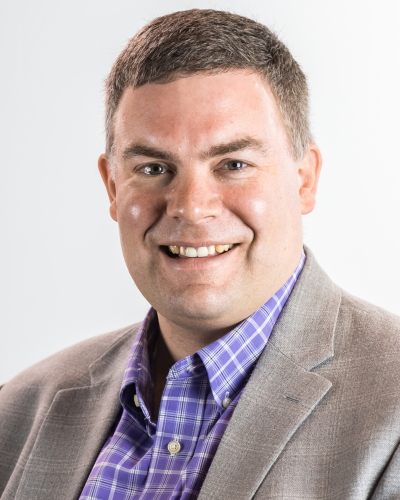 Title: Getting Started with PROC REPORT: Understanding the Building Blocks
Scheduled Time: Thursday, October 22nd, 8:30 am - 12:00 pm
Instructor: Josh Horstman
Abstract: PROC REPORT has been a cornerstone of SAS reporting since Version 6.07, yet it remains one of the most underutilized procedures in the language —
largely because its syntax follows a different logic than most other SAS procedures. Once that logic clicks, however, PROC REPORT becomes an
extraordinarily flexible tool for producing everything from simple listings to complex, publication-ready tables.
This half-day seminar cuts through the complexity with a structured, example-driven approach. Starting from the foundational building blocks and progressing through
increasingly sophisticated techniques, attendees will leave with a clear mental model of how PROC REPORT works — and the confidence to apply it immediately.
Topics covered include:
- The basic structure and syntax of the PROC REPORT step
- Core statements: COLUMN, DEFINE, COMPUTE, BREAK, and RBREAK
- Customizing headers and adding descriptive text to output
- Using the DEFINE statement to control grouping and column behavior
- Generating group-level and report-level break lines and summaries
- Working with aliases to simplify complex report logic
This seminar is ideal for SAS programmers who are new to PROC REPORT or who have used it only sparingly and want a solid, structured foundation.
Instructor Bio: With over 28 years of SAS experience, Josh Horstman is a statistical programming expert, educator, and SAS Certified Advanced Programmer. As a partner at PharmaStat LLC, he supports pharmaceutical clients with clinical trial programming — and brings that practitioner's perspective directly into the training room. Josh is a seasoned presenter at SAS user group conferences and industry events, known for clear instruction and real-world insight. He is based in Indianapolis and has visited 48 states and 32 national parks with his family.
 Title: Creating Custom Graphs Using SAS® and R
Scheduled Time: Thursday, October 22nd, 8:00 am - 11:30 pm
Instructor: Richann Jean Watson
Abstract: Creating custom graphs has always been a challenge regardless of what software you are using. Most software has tools that can help you
create a basic graph such as a simple bar chart, box plot, series plot or scatter plot. These basic graphs use the tools’ default values
for things such as background color, line color, marker color and font. Although most of the graphs produced within a procedure or function
are adequate for most situations, they sometimes lack those one or two extra features you need to really make your graphs stand out and
impress your clients or customers. In this class, we start with the basics and build on to what we know to modify these different
aspects to make a graph that is desired. We walk through several examples, showing how to achieve the desired graph using both SAS and R.
Instructor Bio: Richann Jean Watson is an independent statistical programmer and CDISC consultant based in Ohio. She has been using SAS since 1996 with most
of her experience being in the life sciences industry. She specializes in analyzing clinical trial data and implementing CDISC standards.
Additionally, she is a member of the CDISC ADaM team and various sub-teams.
Richann loves to code and is an active participant and leader in the SAS User Group community. She has presented numerous papers, posters,
and training seminars at various conferences and group meetings. Richann holds a bachelor’s degree in mathematics and computer science from
Northern Kentucky University and master’s degree in statistics from Miami University.
When Richann is not busy coding or volunteering in the SAS User Group community, she is spending time with her family and cute but psycho puppy,
Loki, or doing some of her favorite crafts such as crocheting or sewing.
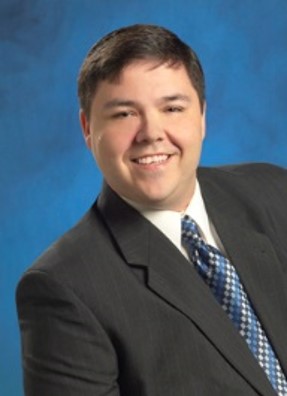 Title: Time for a Quick Start to Time Series Analysis
Scheduled Time: Thursday, October 22nd, 8:00 am - 11:30 pm
Instructor: Danny Modlin
Abstract: Never had the TIME to look into time series analysis? This is the quick start talk for you! This presentation will allow participants to
start with a software agnostic introduction to time series where we will answer "What is a Time Series?" and "What are components of a
Time Series?". We will then move into a discussion of the three main classes of time series models (ESM, UCM, and ARIMAX). Remaining
time will allow the participant to see modeling of time series structures in both SAS® 9.4 and in SAS® Viya® Visual Forecasting. Within
SAS 9.4, emphasis will be placed on utilizing the SAS Studio tasks that will prompt the user for choices in their analysis.
Time will be taken to view the associated code that is generated in SAS 9.4. This presentation will also take time to show SAS Viya
Model Studio in which users can perform time series analysis in another GUI aspect. Discussion will be had concerning differences and
similarities between the SAS 9.4 options and the SAS Visual Forecasting options. Do you have the TIME for this Quick Start?
Instructor Bio: Greetings everyone. I have been a Training Consultant at SAS since April 2011. Before SAS, I was a teacher in middle school, high school, as well as Teaching
Assistant at the University of North Carolina at Wilmington and North Carolina State University. I have a Bachelors of Science in Mathematics from Elon College,
a Masters of Mathematics from UNCW, and a Masters of Statistics from NCSU.
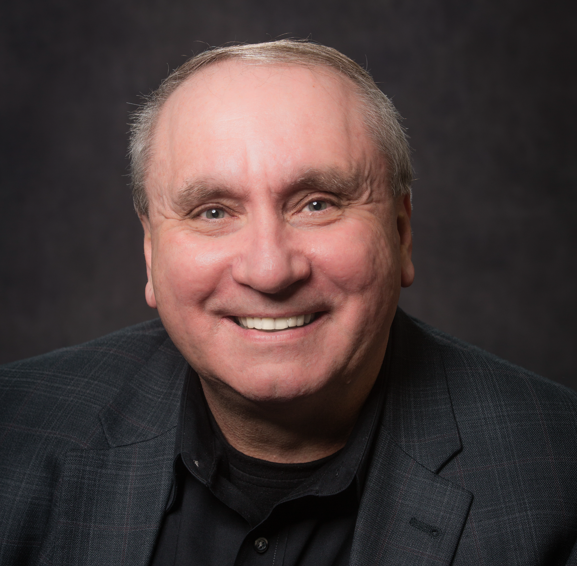 Title: PROC SQL Unleashed: From Essential Queries to Elite Data Mastery Write Smarter Queries, Solve Bigger Problems, and Unlock the Full Power of SQL in SAS®
Scheduled Time: Thursday, October 22nd, 1:00 pm - 4:30 pm
Instructor: Kirk Paul Lafler
Abstract: PROC SQL is one of the most powerful and versatile tools available in SAS, yet many users only scratch the surface of what it can do. This intensive,
hands-on 3 and a half hour tutorial moves beyond basic SELECT statements to explore advanced querying techniques, SELECT-clause execution order, performance
optimization, data summarization strategies, joins (e.g., inner and outer joins), subqueries, inline views, set operators, and dictionary tables.
Attendees will learn how to write cleaner, more efficient, and more maintainable SQL code while understanding how PROC SQL can be seamlessly integrated with the SAS environment.
Whether you're consolidating data sources, generating executive-ready summaries, or engineering robust data pipelines, this tutorial will elevate your SQL skills from functional to exceptional.
Instructor Bio: Kirk Paul Lafler is an internationally recognized analytics and software expert, educator, consultant, programmer, and author with decades of
experience helping organizations and professionals unlock the full value of their data and technology investments. His work spans data science,
analytics, SQL, SAS, Database, Python, R, application development, and systems thinking, with a strong emphasis on practical, real-world solutions.
Widely respected for his ability to translate complex technical concepts into clear, structured, and approachable learning experiences, Kirk’s training
courses and presentations consistently resonate with audiences ranging from hands-on practitioners to technical leaders. His sessions are known for combining
deep technical insight with real-world examples, best practices, and immediately actionable techniques.
As a consultant, Kirk has partnered with organizations across industries to improve analytics capabilities, optimize systems, and enable teams to work more
efficiently and confidently. As an educator and author, he is passionate about helping students and professionals grow their skills, strengthen their problem-solving
abilities, and achieve better outcomes through smarter use of data and software.
Attendees value Kirk’s engaging delivery style, clear explanations, and results-focused mindset. His presentations don’t just explain what to do - they show how
and why, empowering participants with greater confidence, capability, and impact.
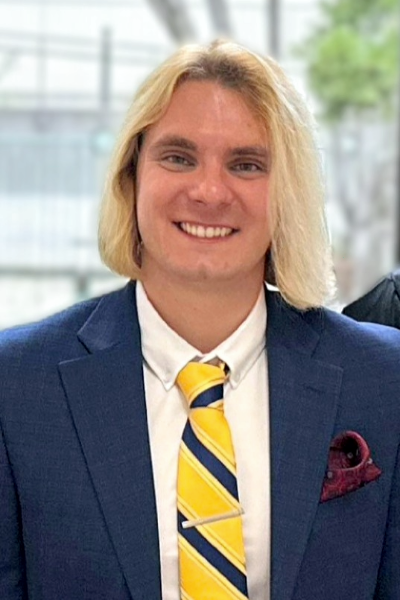 Title: Mastering AI Systems and Machine Learning with Python: Training, Tuning, and Interpreting Predictive Models
Scheduled Time: Thursday, October 22nd, 1:00 pm - 4:30 pm
Instructor: Ryan Paul Lafler
Abstract: This hands-on workshop provides a practical introduction to building machine learning workflows that support modern AI systems using Python. Designed for data scientists, statisticians, programmers, machine learning engineers, researchers, analysts, and students, this workshop focuses on how to prepare data, train supervised learning models, tune model performance, and interpret predictive results for classification and regression tasks.
Attendees will gain practical experience with Python’s open-source machine learning ecosystem, with an emphasis on organized, reproducible machine learning pipelines, model evaluation and selection, and fine-tuning strategies. Through guided examples and hands-on exercises, attendees will learn how machine learning models are developed as part of broader AI systems and how predictive models can be trained, evaluated, and interpreted within reliable analytical workflows.
Emphasizing a model-driven approach, this workshop incorporates data preparation for machine learning pipelines, balancing model complexity with interpretability, and addressing common modeling challenges such as overfitting, underfitting, feature selection, and generalization to unseen data. Attendees will work within the scikit-learn ecosystem to build structured workflows for analytical and machine learning problems.
Key topics covered in this workshop include:
- Data cleaning and exploratory data analysis (EDA) to uncover feature relationships
- Building comprehensive scikit-learn pipelines to clean data, engineer features, and prepare datasets for machine learning
- Training and interpreting supervised learning models, including LASSO regularization, decision trees, random forests, and gradient-boosted ensembles
- Hyperparameter tuning, search spaces, feature selection, and strategies for improving generalization to unseen data
- Model evaluation strategies, data partitioning techniques, and evaluation metrics for classification and regression
- Understanding the bias-variance tradeoff and model interpretability
- Connecting machine learning workflows to broader AI system design and applied analytics and decision-making
Instructor Bio: Ryan Paul Lafler is the President, CEO, and Lead Consultant of Premier Analytics Consulting, LLC, a San Diego-based small business specializing in applied AI/ML systems, big data engineering, statistical modeling workflows, GIS solutions, and custom full-stack analytics platforms. He and his team collaborate with enterprise organizations, public-sector agencies, and research institutions to develop data-driven systems that enable organizations to process, analyze, and model complex data in support of informed decision-making. Ryan’s professional background spans consulting, systems architecture, AI/ML systems development, data infrastructure, and analytics. His work focuses on building open-source analytics platforms, scalable data engineering pipelines, rigorous statistical workflows, and applied AI systems designed for reliability, validation, and production deployment. He routinely develops AI, analytics, and system architecture solutions using Python, R, SQL/NoSQL, SAS®, and modern JavaScript frameworks. In addition to his consulting work, Ryan serves as a part-time Adjunct Professor at San Diego State University, where he teaches within the Big Data Analytics Graduate Program, the Department of Mathematics and Statistics, and the Global Campus Program. Ryan earned a Master of Science in Big Data Analytics (2023) following the successful defense and publication of his graduate thesis, and a Bachelor of Science in Statistics with a Minor in Quantitative Economics, with Distinction (2020), both from San Diego State University.
 Title: PROC FCMP User-Defined Functions: An Unsurpassed Masterclass in SAS®!
Scheduled Time: Thursday, October 22nd, 1:00 pm - 4:30 pm
Instructor: Troy Martin Hughes
Abstract: Attend and receive a FREE copy of the instructor’s 500+ page hardcover textbook, PROC FCMP User-Defined Functions:
An Introduction to the SAS® Function Compiler, Second Edition, released in 2026! Students will receive the physical
book at the training. This course provides a gentle introduction to SAS user-defined functions, which enable SAS
practitioners to build reusable chunks of code that can be shared among coworkers and teams, and which improve the
efficiency and quality of SAS software development. No prior knowledge of PROC FCMP, SAS arrays, or the hash object is required.
Instructor Bio: "Troy Martin Hughes has been a SAS practitioner for more than 20 years, has managed SAS projects in support of
federal, state, and local government initiatives, and is a SAS Certified Advanced Programmer, SAS Certified Base Programmer, SAS Certified
Clinical Trials Programmer, and SAS Certified Professional V8. He has given more than 180 presentations, trainings, and hands-on workshops at
SAS conferences, including at SAS Explore, SAS Global Forum, SAS Analytics Experience, WUSS, SCSUG, SESUG, MWSUG, PharmaSUG, PHUSE, BASAS,
BASUG, and MSUG. He has authored three groundbreaking books that model software design and development best practices:
- PROC FCMP User-Defined Functions: An Introduction to the SAS® Function Compiler, Second Edition (2026)
- SAS® Data-Driven Development: From Abstract Design to Dynamic Functionality, Second Edition (2022)
- SAS® Data Analytic Development: Dimensions of Software Quality (2016)